Built for production work
Steady removal pace across large areas – no stop-start workflow.
Dipperfox
Built for 13-30 ton excavators and big, repetitive work: forestry blocks, rail/road corridors, and large site clearing. The 850 Pro removes stumps in place, fast and consistently – so you can keep the whole project moving without adding extra machines or extra hauling.
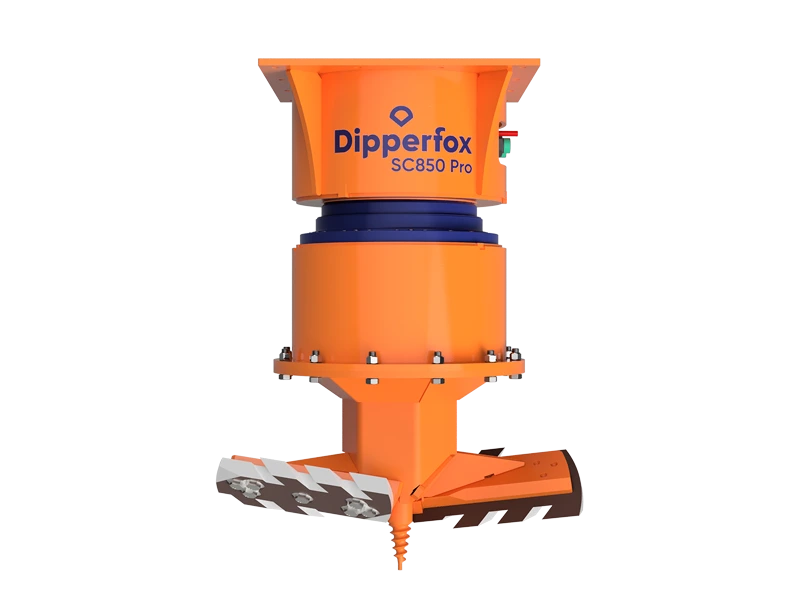
When you have hundreds of stumps, the slow part isn’t the cutting – it’s the logistics. The 850 Pro helps you clear faster, keep the ground more manageable, and avoid hauling root balls around the site.
On major corridor and infrastructure jobs, stump removal can decide the timeline. In large-scale work, teams have reported finishing a 100-hectare scope in roughly 50 days versus about 70 days with traditional approaches – often reaching up to 2 hectares per day depending on site conditions and stump density.
Traditional uprooting can also stack costs quickly: hauling and landfill fees. With the 850 Pro, stumps can be processed directly on site, cutting out a lot of time to “move it, store it, handle it again” part of the job.
If you’re clearing big areas on a deadline, speed is good. Fewer extra steps is better.
Our company specializes in consulting, product development, and customer support. We tailor our services to fit the unique needs of businesses across various sectors, helping them grow and succeed in a competitive market.
The 850 Pro is for the jobs where you’re not doing “a few stumps.” You’re doing hundreds – sometimes thousands. It’s built to run on 13-30 ton carriers and keep a consistent pace so the rest of the operation doesn’t wait on stump removal.
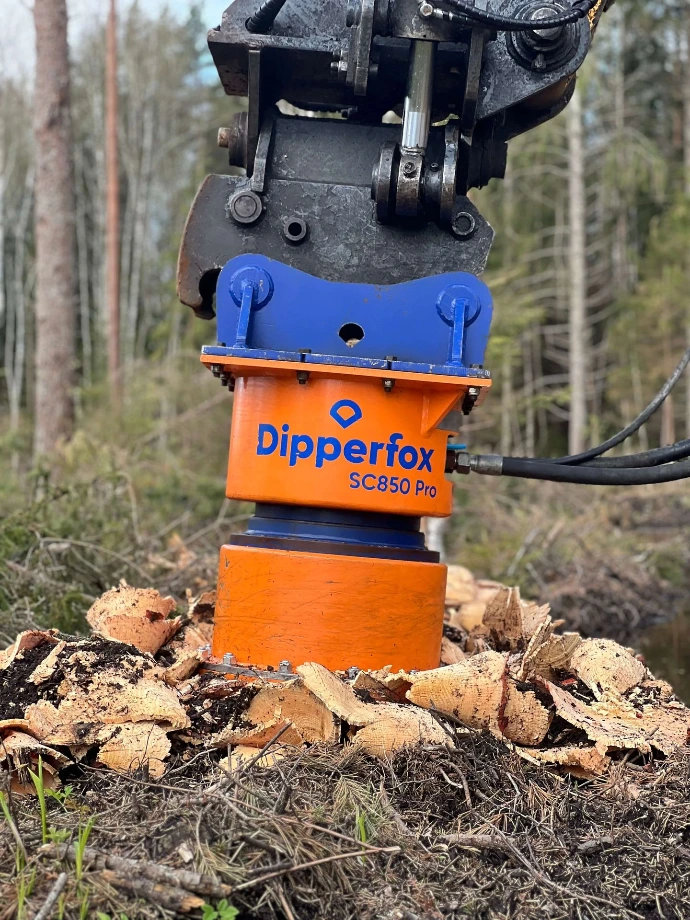
Digging stumps out creates a chain of extra work: holes to fix, root balls to move, stockpiles to manage, and often soil/stones mixed into the wood. Processing stumps in place helps reduce hauling, reduces stockpiling, and keeps the workflow cleaner across the site.
Wear parts are designed to be replaced, not babied. Blades are boltable and dual-sided, and the center screw is replaceable. It’s built for crews who want predictable maintenance – without turning a simple job into a workshop project.
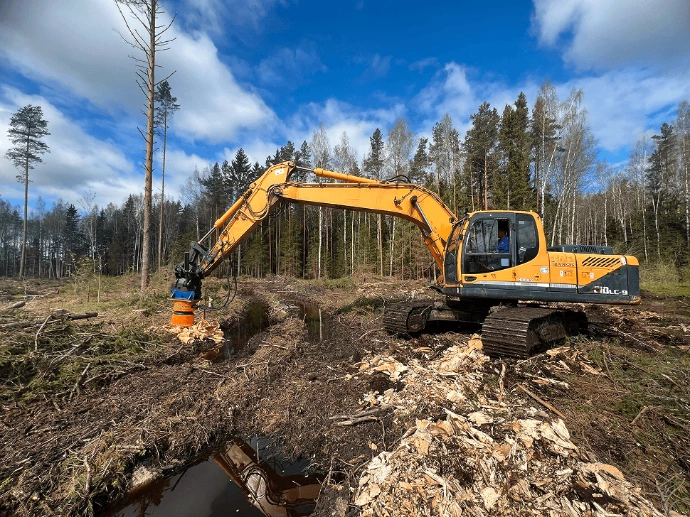
The 850 Pro is the attachment you use when time per stump matters. High torque, stable performance, and a setup that’s meant for repeat work – railways, highways, power lines, forestry, and large-scale site clearing. It’s not built to look clever. It’s built to finish the area.
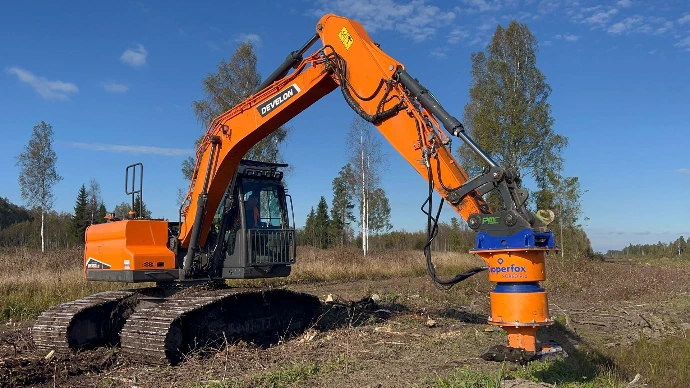
The 850 Pro is built for 13–30 ton excavators. If you’re below that range, you’ll usually be underpowered or under-flow, which reduces output and can stress the carrier.
Target range is 110–230 l/min. Flow matters because it affects cycle speed under load. If your carrier’s flow drops significantly under load, real productivity drops with it.
180–350 bar. Pressure supports torque under resistance. Your setup should be able to hold working pressure consistently during operation.
Sometimes, but output will be lower. If your work is occasional or stumps are smaller, it may still be fine. If it’s daily production work, matching power properly saves you money in the long run.
It depends on your coupler type and dimensions. We can supply mounting solutions, but we need your coupler standard and excavator model to confirm.
Yes, as long as the hydraulic requirements are met and the carrier is stable for the operating position. Long reach can reduce stability and precision if you’re working extended.
The 850 Pro is primarily meant for excavators in the specified class. If you have a special carrier setup, share the machine specs and we’ll tell you straight if it makes sense.
Up to 900 mm drilling depth. Actual required depth depends on your next phase (grading, planting, foundations, access).
Large stumps in production environments. The point of the 850 Pro is not “can it do it,” but “can it do it all day without slowing the site down.”
It depends on stump diameter, species, soil, density, and operator rhythm. If you share typical stump sizes and site conditions, we can estimate realistic throughput.
Yes. That’s exactly where torque and stable operation matter. Species and root structure affect time per stump, but the machine is built for that variation.
Rocky sites are possible, but like any cutting tool, stones increase wear. The key is operator control and realistic expectations for consumable life.
It can work, but access and ground stability become the limiting factor. One advantage of processing in place is you typically avoid creating the massive holes you get from uprooting.
Yes, within reason. Frozen ground changes resistance and can affect performance. If you operate in deep frost, we recommend discussing typical winter conditions so expectations are realistic.
It’s generally more controlled than aggressive side-to-side grinding. That said, any stump processing creates chips—jobsite safety and PPE still apply.
Because scale punishes extra steps. If you dig stumps out, you create hauling, holes to fix, and stockpiles. Processing in place reduces that chain and helps the next phase start sooner.
Often yes, depending on project requirements. Processing in place typically keeps the material more usable than uprooted stumps mixed with soil and stones.
In many projects, yes—because you’re not hauling root balls to disposal. Exact savings depend on local disposal rules and site plan.
Typically, yes. When stumps are processed in place, you can move faster into topsoil stripping, grading, and embankment work versus waiting on extraction and cleanup.
Often, yes. Uprooted stumps tend to carry soil and stones. Cleaner material is easier to handle and more likely to be reusable.
Boltable dual-sided blades and the replaceable center screw are the key consumables. They’re designed to be swapped without turning the job into a rebuild.
Depends on stump species, soil, stone content, and operator technique. We can give a realistic range if you tell us the typical job conditions.
Yes. The blades are dual-sided, so you can rotate/flip to extend life.
Routine checks are straightforward. The idea is predictable upkeep—service it like a working attachment, not like a delicate tool.
Normal workshop tools cover most needs. If there are specific service requirements, we provide guidance and documentation.
Follow the service schedule and oil requirements. Gearbox health is mainly about correct setup, proper operation, and staying on the maintenance plan.
Yes. We recommend keeping a basic consumables set on hand if you’re running production work.
Standard jobsite PPE applies: eye/face protection, hearing protection, safety boots, and appropriate workwear. Keep safe distances like you would with any cutting operation.
The 850 Pro is mainly for large-scale work, but it still operates with controlled processing. For tight urban areas, the smaller models may be the better fit.
Any below-ground work carries that risk. Utility locating and site checks are your responsibility. If utilities are present, plan depth and approach accordingly.
If you can operate an excavator properly, you can operate the attachment. We provide guidance on technique, safety, and maintenance to get consistent results quickly.
Lead time depends on production schedule and region. Request a quote and we’ll give you a clear timeline.
Yes. Shipping method and cost depend on destination.
Warranty terms depend on region and purchase channel (direct/dealer). We’ll provide the warranty terms in writing with your quote.
Parts availability, documentation, and technical support. If you’re running production work, we recommend setting up a parts and service plan up front.
Yes—and you should ask. Tell us your carrier model, stump sizes, stump density, and typical job type. We’ll recommend the model that makes sense instead of upselling.