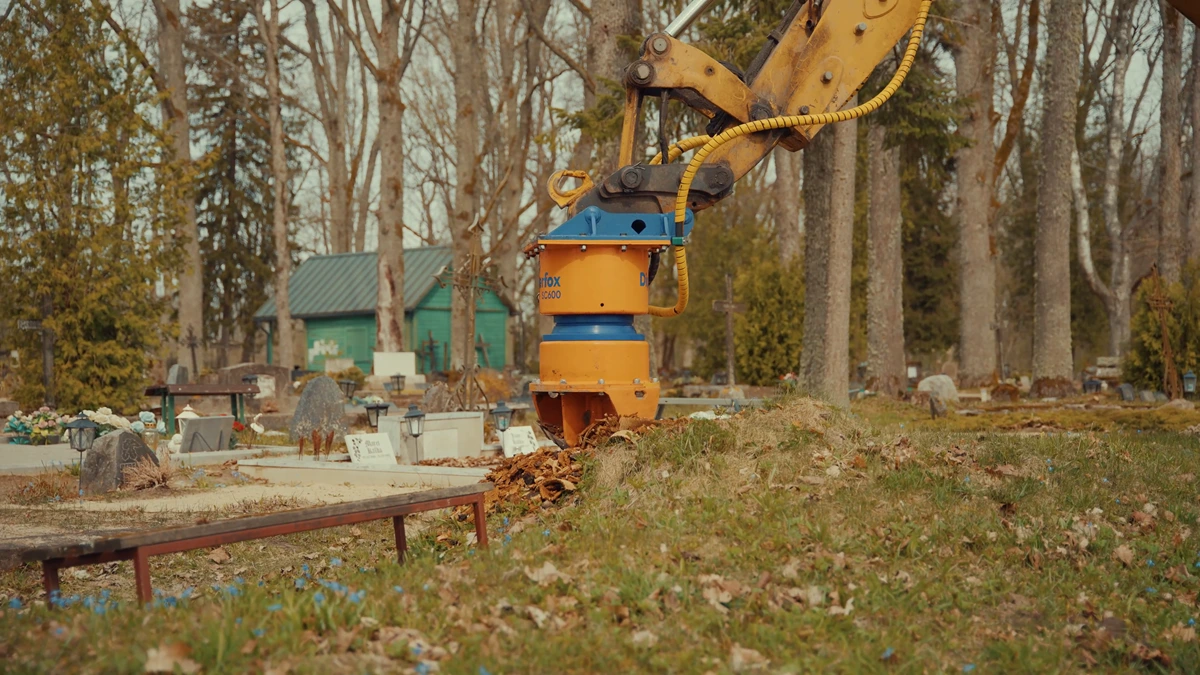
Stump removal in a cemetery requires a different approach than stump removal on open land, roadside projects, or general site clearing. The environment is more sensitive, access is often more limited, and the standard for cleanliness and control is much higher.
In many cases, the challenge is not removing the stump itself, but doing so without damaging surrounding turf, disturbing nearby objects like pathways or gravestones, or creating unnecessary cleanup afterward.
For operators working in cemeteries and memorial parks, that makes method selection especially important. A stump removal solution that works well in open ground may be far less suitable in an area where finished surfaces are close to the work zone.
This is why cemetery stump grinding is a low-disturbance job rather than just a high-output one. The most suitable approach is often the one that gives the operator the greatest control over debris, machine movement, and surface impact while still removing the stump efficiently.
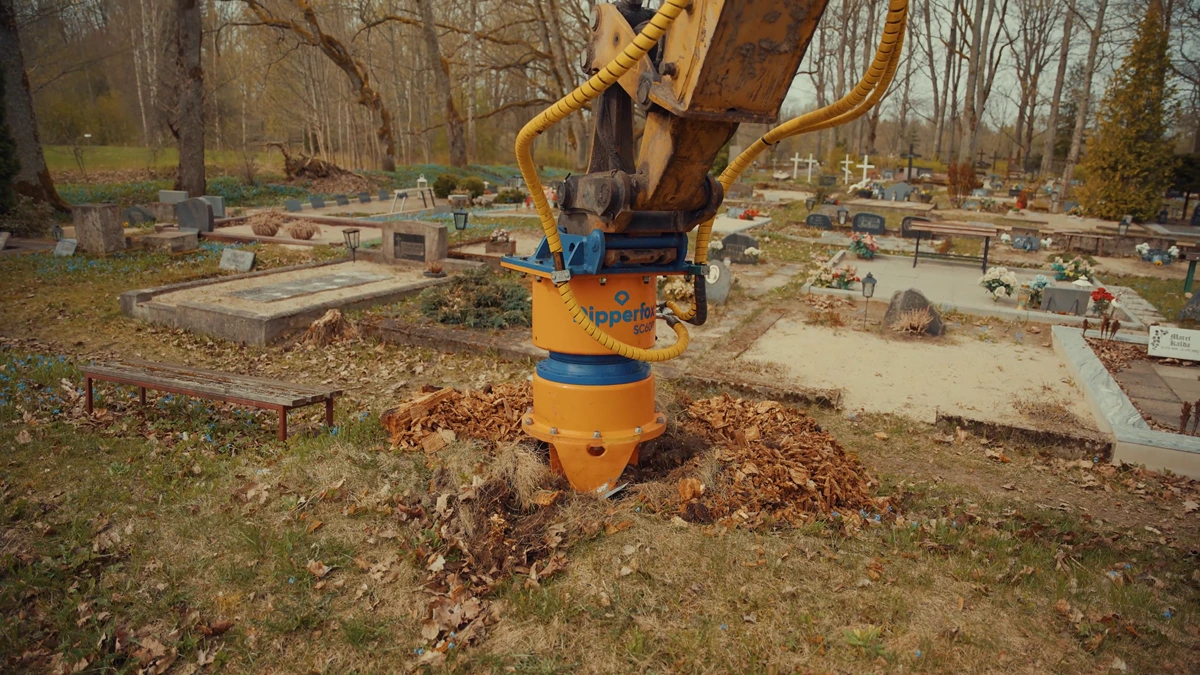
Stumps in cemeteries may be located between grave plots, next to monuments, along internal roads, or near pedestrian paths. The working area is often tighter than in general landscaping or forestry, and the consequences of unnecessary disturbance are more serious.
Ground damage is one concern. Repeated repositioning and aggressive removal methods can leave visible disruption in turf and finished surfaces.
Debris control is another: flying chips, soil, and wood fragments are more problematic because nearby features are often difficult or expensive to repair. If the chosen method leaves a wide mess, damaged grass, or extra reinstatement work, it creates additional cost and labor beyond the removal itself.
The limitations of conventional stump grinding in cemetery settings
Traditional stump grinding tools remain widely used, but they are not always ideal for cemetery work. High-speed grinding systems can be productive, but they also tend to create a broader working zone, throw debris farther from the cutting area, and require more care around finished surroundings.
In open or less sensitive areas, those trade-offs may be acceptable. In cemeteries, they become more significant. Headstones, benches, and pathways reduce the margin for error.
Cleanup standards are also different. Grounds staff and cemetery managers are often not looking only at speed, but how neatly the job can be completed and how little corrective work is needed afterward.
Access can also limit the usefulness of larger stump grinding setups. Many cemeteries include narrow spaces that make maneuvering more difficult. In these cases, a method that depends on a larger machine footprint or a wider debris zone may be less practical even if it performs well elsewhere.
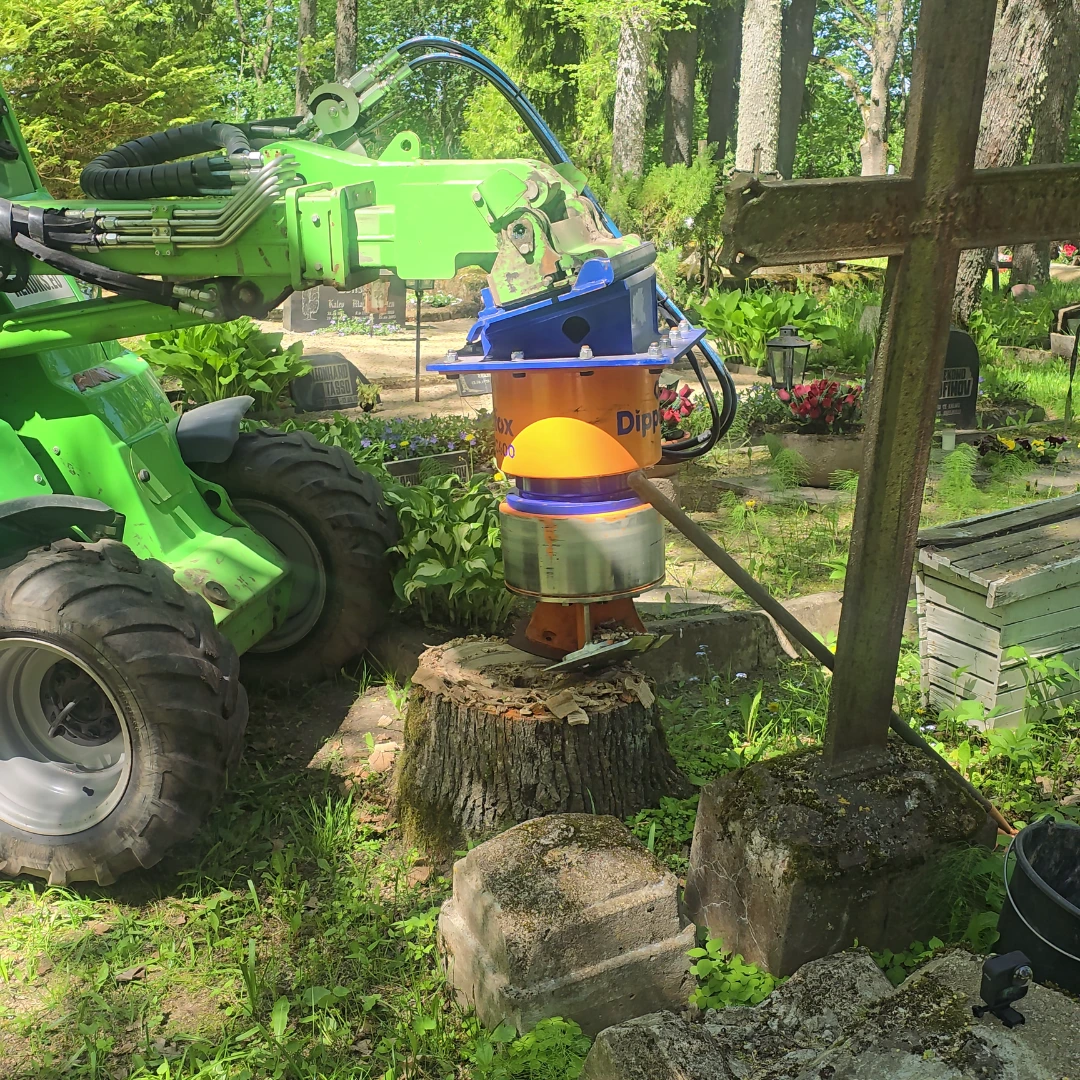
Historic cemeteries may require additional care. In these settings, stump removal is not only a maintenance question but sometimes also a preservation issue. Older landmarks, fragile ground conditions, undocumented root systems, or local heritage requirements can affect what type of intervention is appropriate.
For that reason, stump removal in historic cemeteries should be evaluated case by case. A low-disturbance method may still offer clear advantages, but the site context must always come first.
Why a low-disturbance approach makes sense
A low-disturbance stump removal method is better suited to cemetery work because it places more emphasis on controlled cutting and less emphasis on aggressive material ejection. This matters in environments where operators need to work close to sensitive features and where minimizing the impact on surrounding ground is part of doing the job properly.
This is where Dipperfox has a clear advantage. Instead of relying on high-speed grinding, Dipperfox uses a slow-speed, high-torque drilling action. In practical terms, that means stump removal can be carried out with a more controlled cutting process and with less flying debris than conventional grinding methods.
For cemetery work, that can make a meaningful difference in how close the operator can work to delicate objects, paths, and landscaped surfaces without throwing mess all around the surrounding area.
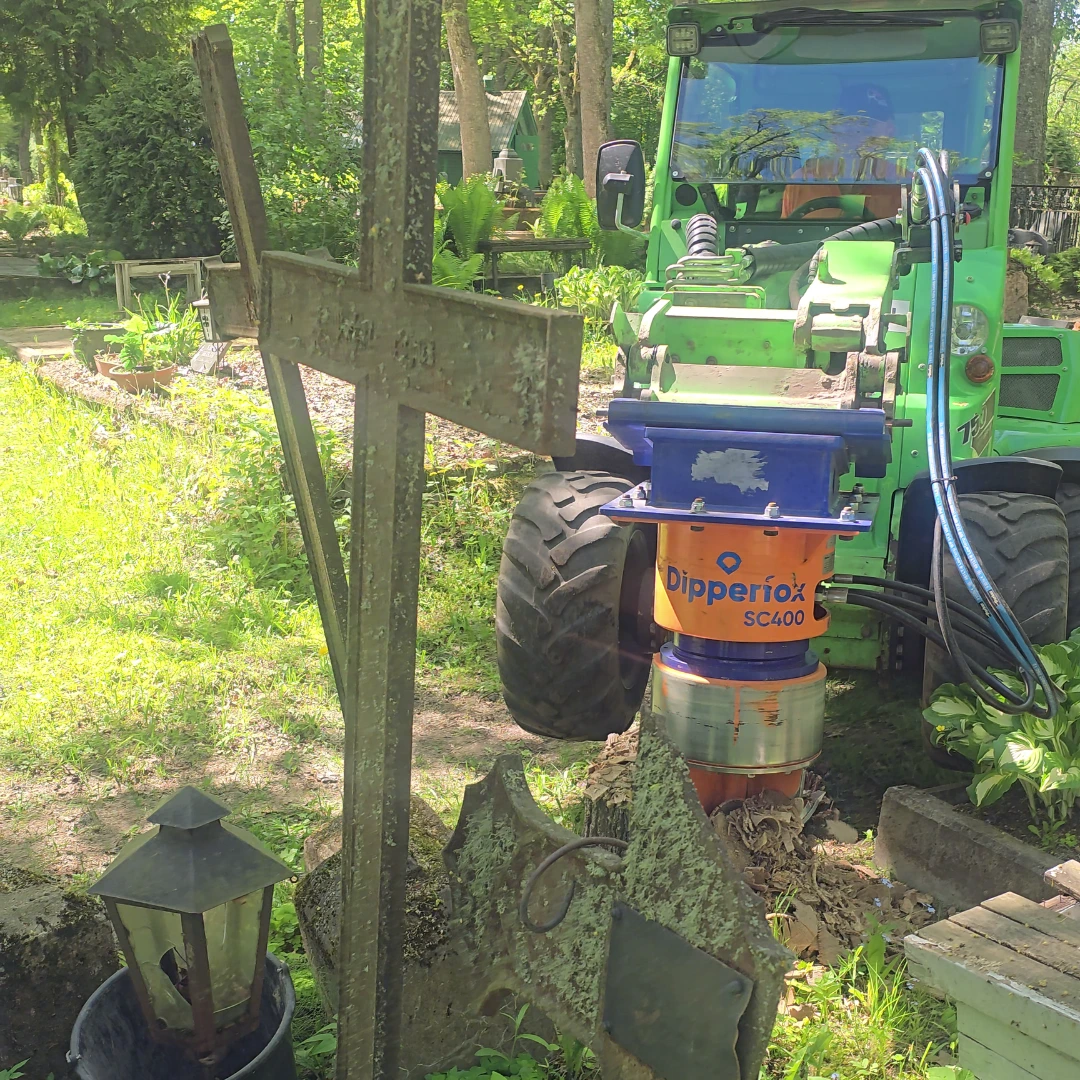
The reduced disturbance is not only about appearance. It also affects how much restoration is needed after the stump is removed. In maintained grounds, that matters. A removal method that solves the stump problem while limiting repair work afterward is often the better operational choice.
Low-disturbance stump removal is especially relevant in cemetery environments where access is restricted, or the surroundings are sensitive. This includes stumps located along internal cemetery paths and between gravestones. Within memorial parks, where turf condition and visual neatness are important, using a low-impact method makes all the difference.
The importance of carrier choice
As with any hydraulic attachment, performance depends heavily on the carrier. This includes hydraulic pressure and flow, as well as machine size, weight, maneuverability, and ground impact.
A machine that is technically powerful enough to run the attachment may still be poorly suited to the site if it is too heavy for the surface conditions or too large for the available access. That is why compact and mid-sized carriers are often a better match for cemetery stump removal. They can move more easily within tight layouts, place less pressure on finished ground, and allow the operator to work more precisely in restricted spaces.
In practice, choosing the right setup means starting with the environment rather than the stump alone. Access width, turning space, surface sensitivity, and the required level of control all matter. Once those factors are clear, it becomes easier to determine which carrier and attachment combination is actually appropriate.
Choosing the Right Setup for Sensitive Ground
Cemetery stump removal should begin with the surroundings, not just the size of the stump. Access and the amount of reinstatement required afterward all affect which method is suitable.
A low-speed, high-torque attachment such as Dipperfox gives operators greater control over the cutting area while reducing flying debris and unnecessary ground disturbance. Combined with a compact or mid-sized carrier, it can provide a practical setup for working between gravestones, alongside paths, and across maintained turf.
Removing the stump quickly is only part of the job. When working in cemeteries, it is much more important to leave the surrounding area as close as possible to the condition it was in before the work began.